
Most of what we know about the kingdom comes from oral tradition and historical records, as the kingdom’s development and collapse spans the pre-colonial and colonial eras of the nineteenth century AD in southern Africa. With a focus on the material remains of past cultures, there is considerable opportunity for archaeology to provide evidence that complements written records and oral traditions and that informs us about questions where these records are incomplete or silent.
In this cultural context, archaeological research can establish a more secure understanding of settlement pattern, settlement organisation, ecology and landscape use, economics, the nature of non-elite lifeways, and how the network of relations amongst social groups and strata that comprised the kingdom’s populace are materialised.
Over five decades of intensive historical scholarship has explored the kingdom’s formation, social, economic, and political organisation, religion, the military, and a myriad of myths and assumptions that grew out of the colonial historiography. The depth of historical records combined with a considerable body of later ethnographic accounts provide a rich but incomplete record of life in the kingdom and many potential material correlates for archaeological study. Like other historical archaeologies, written records and oral traditions can inform and contextualise cultural material, and these records can complement or conflict with archaeological evidence. However, a historical archaeology of the Zulu Kingdom never fully developed. Complementary archaeological research has been minimal. Survey and excavations have occurred at several important battlefields and at three king’s capitals, Shaka’s second at kwaBulawayo (1820-1827), Dingane’s at uMgungundlovu (1829-1838), and Cetshwayo’s at oNdini (1873-1879). Other field and cartographic work have located Shaka’s first capital of kwaGibixhegu (1818-1820), a number of other military settlements (amakhanda), British forts, and Boer laagers.
In each of these cases, historical data were instrumental in locating sites and interpreting material remains. However, they also highlight evidentiary gaps in our knowledge of the period that can be addressed using archaeological methods. Amongst the most striking of these deficits is a “ground-truthing” of the settlement system that characterizes the kingdom. For archaeologists, knowing where settlements occur and what function they served in the broader settlement system provide fundamental data for reconstructing cultural landscapes and understanding cultural dynamics from household to regional scales.
Our Research
ZKAP combines a wide range of archaeological, historical, and scientific evidence. The Archaeology Team is primarily focused on two main tasks: understanding the history of settlement in the emaKhosini and detailed study of the finds from previous excavations of king’s capitals alongside new finds.
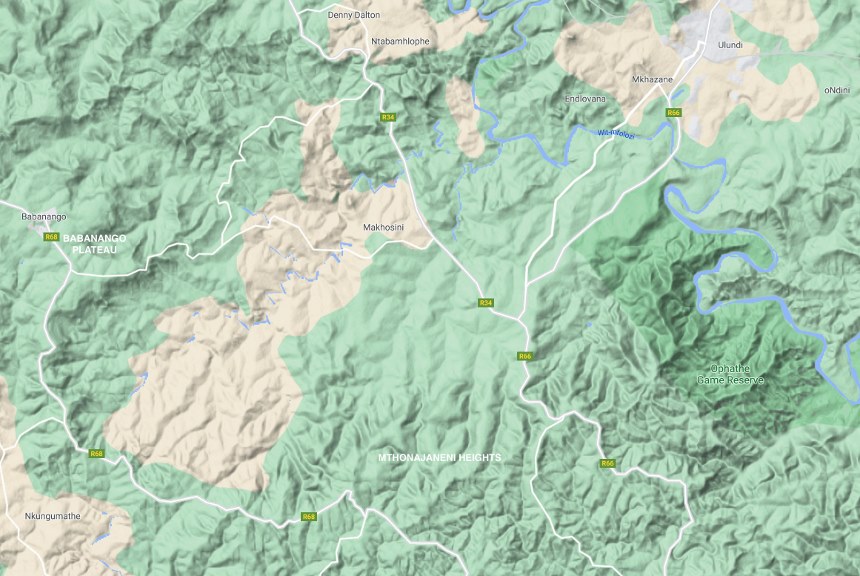
We are approaching our first task through an archaeological survey of the emaKhosini – from the Opathe Game Reserve and Park in the east to the Babanango Plateau in the west, the Mthonjaneni Heights in the south to the White uMfolozi River in the north. Documenting the kinds and distribution of sites across the area using aerial and pedestrian survey methods will provide new data about the relations between kings and commoners.

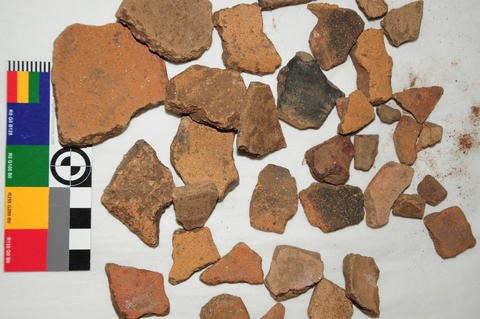
Our second task focuses on the further study of material remains from previously documented excavations at King Dingane’s capital at uMgungundlovu and King Cetshwayo’s capital at oNdini in addition to new finds gained through field survey and our test excavations. Our efforts will concentrate on evidence for food provisioning through the study of animal remains and for crafts production through the study of ceramics, pottery, glass, beads, iron and brass objects, and groundstone. Specialists in each class of remains are responsible for the formal study of objects and will work closely with members of the Archaeometry Team, and, indeed, many of our personnel overlap between the two teams.
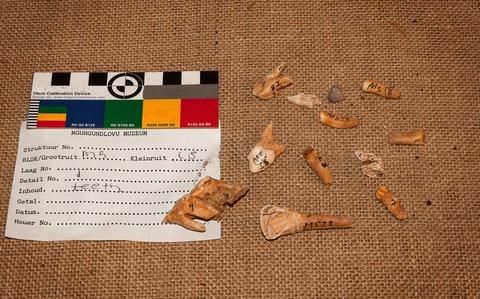
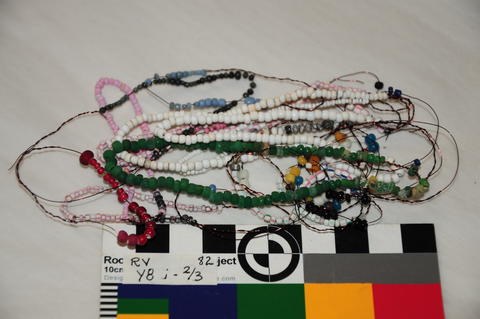
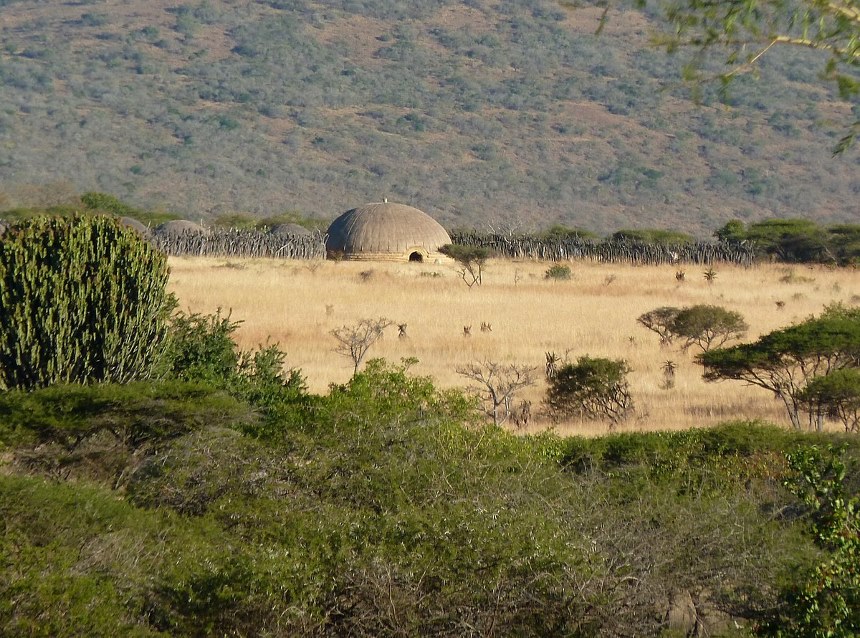
Apart from the technical studies of artefacts and features at archaeological sites, the Archaeology Team also includes specialists in geomatics and GIS and the digital curation of heritage materials. Our intent is to generate detailed spatial data from archaeological, historical and ethnographic sources to create tools for our own research and for use in museums, heritage management, conservation and development planning by public, private, and community agencies. Our digital curation strategy involves creating a persistent 2D and 3D digital archive for research and teaching, combining materials in existing collections and new finds, including 3D printed replicas for use by museums and schools.
Archaeology Team
Kent D. Fowler, Project Director and Lead, Archaeology Team
Kent is Associate Professor of Anthropology and Senior Fellow of St. John’s College at the University of Manitoba. He specializes in the archaeology and ceramic technology of farming societies and has worked in the Mediterranean, Near East, South America, and Canada. He has conducted research in South Africa and Swaziland since 1997 and is perhaps best known for his long-term ceramic ethnography project demonstrating the ways technical know-how in Zulu pottery-making is linked to people’s daily and seasonal routines, social networks, and social identities. Research on the Zulu Kingdom began in 2013, and has thus far examined pottery economics, cattle provisioning, and settlements linked to King Dingane’s capital at uMgungundlovu.
Leonard O. van Schalkwyk, Co-Lead, Archaeology Team
Len is the managing director of eThembeni Cultural Heritage and brings outstanding heritage and cultural knowledge to the project. He has nearly 40 years of professional experience as a practising archaeologist and heritage resource manager in South Africa, Botswana and Mozambique. Len’s research interests have focused on the Iron Age of southern Africa, while his management specializations are heritage impact assessments, community liaison, ancestral grave management, and integrated environmental management. He has consulted to a signficant range of Southern African governmental bodies, NGO’s and private entities and is a respected and professional practitioner. He is currently on the board of the African Conservation Trust and is working in Lesotho on a large scale mitigation, ensuring compliance and guidance for all heritage related issues. Kent and Len have worked together on various projects since the Ndondonwane excavations (1995-1998) co-directed by Len and Professor Haskel Greenfield.
Collaborators and Specialists in the Archaeology Team
Ceramics
Kent D. Fowler
Fauna
Elizabeth Arnold (Garden State), Haskel Greenfield (Manitoba)
Geographical Information Systems
Dr. David Walker (Manitoba)
Aerial survey
Carl Grossman (African Conservation Trust)
Fieldwork Operations
Chris Thornhill (eThembeni Cultural Heritage)
Curation
KwaZulu Cultural Museum and KwaZulu-Natal Amafa and Research Institute
 Zulu Kingdom Archaeology Project