
The Zulu Kingdom is best know from a large corpus of historical records. By contrast, the archaeology is understudied. It is therefore difficult to compare the Zulu Kingdom with other African kingdoms and states known primarily through archaeological research.
The specific objective of the Zulu Kingdom Archaeology Project is to develop a better understanding of the kingdom’s economic foundation – the basis of daily life, prestige, wealth and power – and how this contributed to its rise and destruction.
To accomplish this, we think it is important to include what can be learned from things, places, and people, past and present. We also think it is important to concentrate on first principles in the study of complex societies. Our approach focuses on the fiscal foundation of the kingdom – that is, the means and processes by which people met their needs and wants – during a dynamic period that vacillated between episodes of political, economic, and social stability and uncertainty.
Understanding how resources – both material and human – are mobilized by elites to support strategies that centralize power remains a vital approach to understanding social stratification and political control. Such systems are built on the production of surpluses. In examining how social relations and political power structure economic relationships, we confront an absence of evidence for surplus production in the Zulu Kingdom.
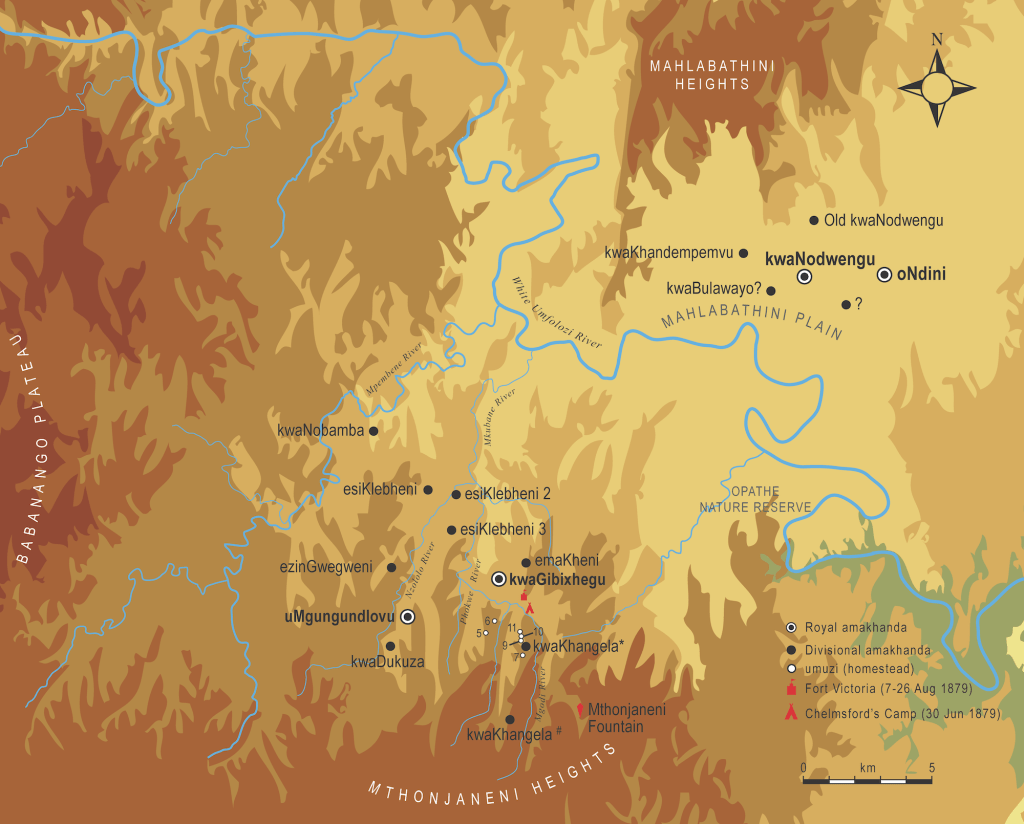
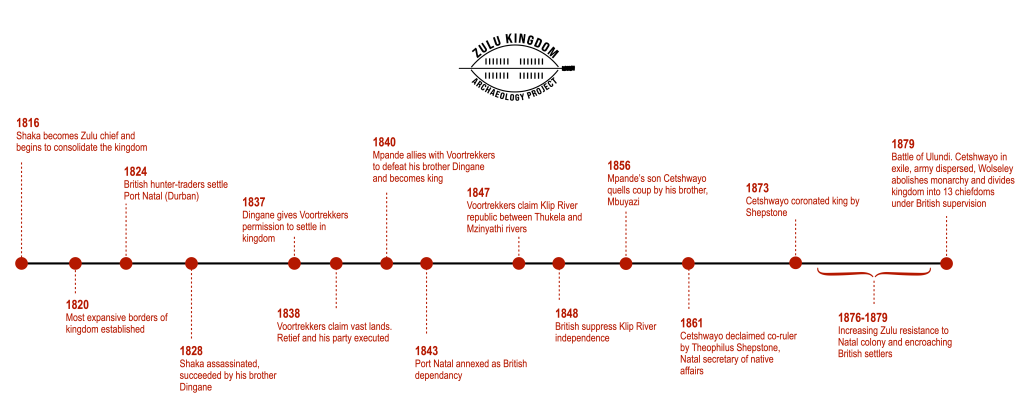
For this phase of research (2020-2026), we are concentrating our attention on the emaKhosini, the homeland of the Zulu chiefdom and heartland of the Zulu Kingdom (see map). The emaKhosini is an ancient basin of rolling terrain bound by an arc of high hills to the southwest and the White uMfolozi River to the northeast. The emaKhosini and the Mahlabathini Plain across the river was the area where Shaka kaSenzangakona replaced his father as chief of the Zulu, founded the expansion and consolidation of the kingdom, where subsequent kings established their capitals, and where, in June of 1879, the kingdom was subjugated by British forces (Battle of Ulundi), ending its existence as an independent African polity.
Research Studies
ZKAP combines a wide range of archaeological, historical, and scientific evidence. Archaeological survey informs us about where and how people lived on the landscape. Archaeological science provides us with new insights into ecology, farming practices, the location and use of natural resources, and how things were made, used, and exchanged throughout the kingdom. Critical historiography and material culture studies brings new emphasis on the non-elite people in the kingdom and the roles of men, women, and children in pre-colonial Zulu society. And genetic research on domesticated animals – the principal form of wealth in pastoral societies – provides us a new awareness of precolonial herd management and movement.
Landscape studies
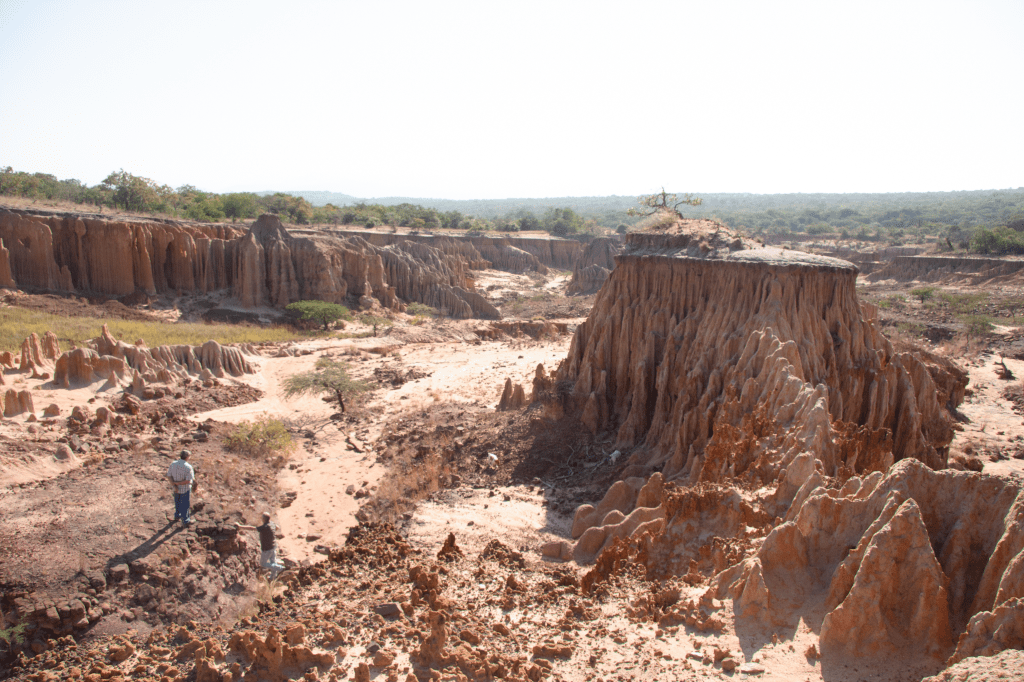
Landscape history reveals how changes in climate over the past two centuries and modern land use have impacted site preservation and land use strategies, such as the increasing erosion of Natal Group sandstone in eastern emaKhosini.
Resources
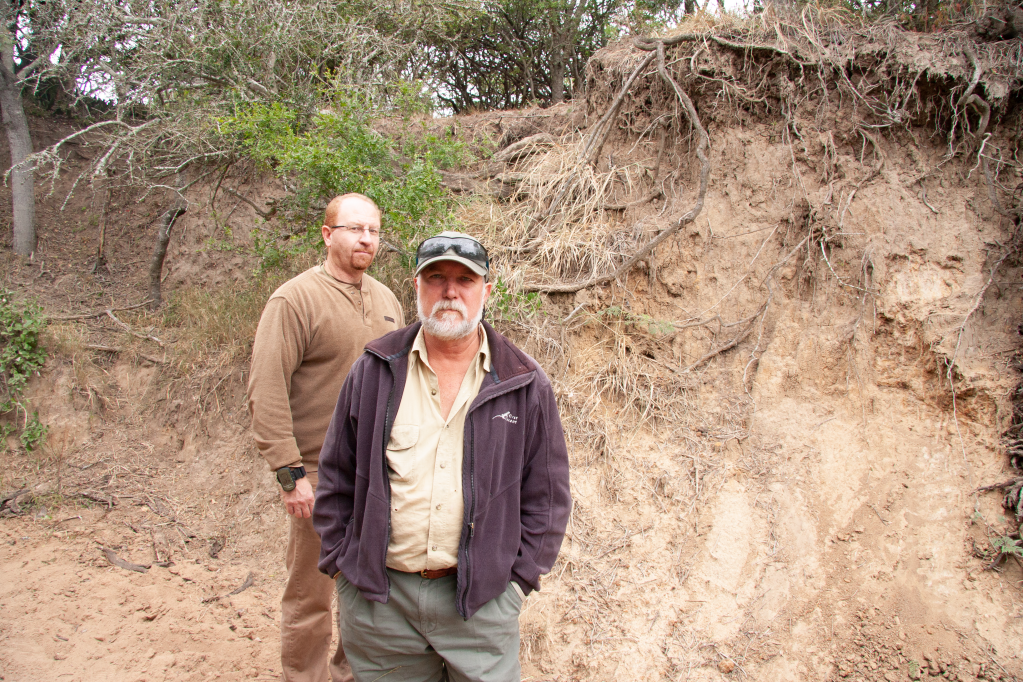
The study of local resources helps determine the use and movement of raw materials and goods to sustain life in the kingdom.
Mostafa Fayek (background) and Len van Schalkwyk (foreground) during clay sourcing field research in the emaKhosini (2014).
Settlement of the emaKhosini
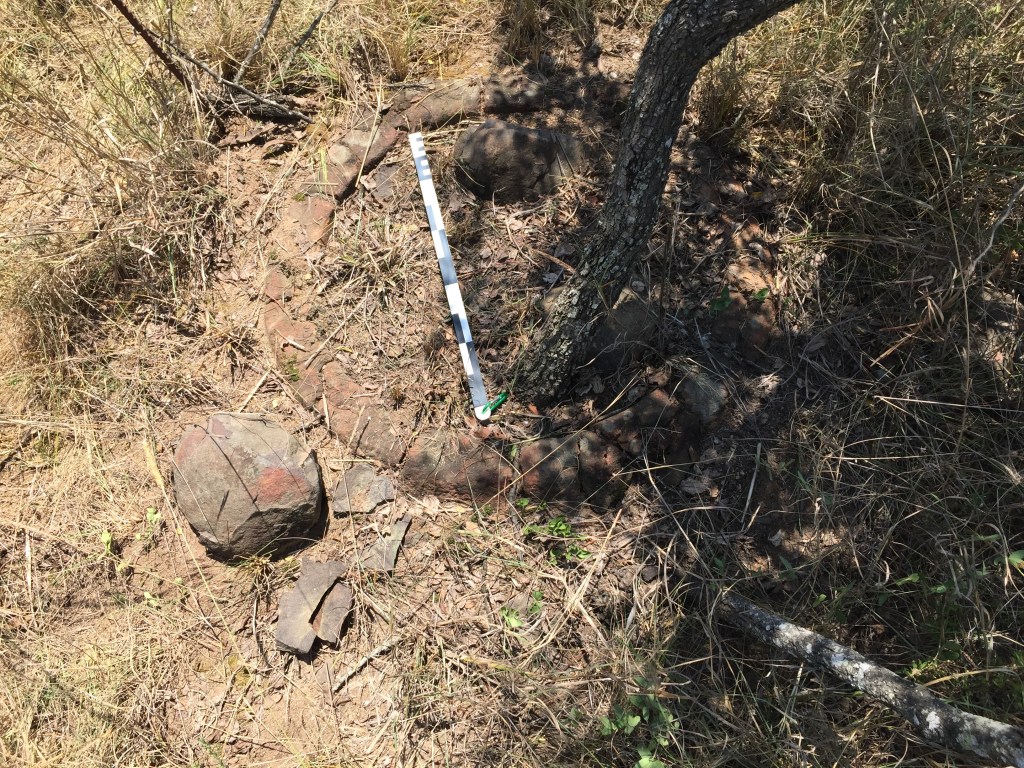
Pedestrian and aerial survey across the emaKhosini records the location, spatial layout and preservation of Zulu Kingdom sites, such as this floor at kwaDukuza (taken 2018). Past research has focused almost exclusively on king’s capitals, and our efforts will focus on locating and investigating places occupied by families during the kingdom era.
New research at king’s capitals
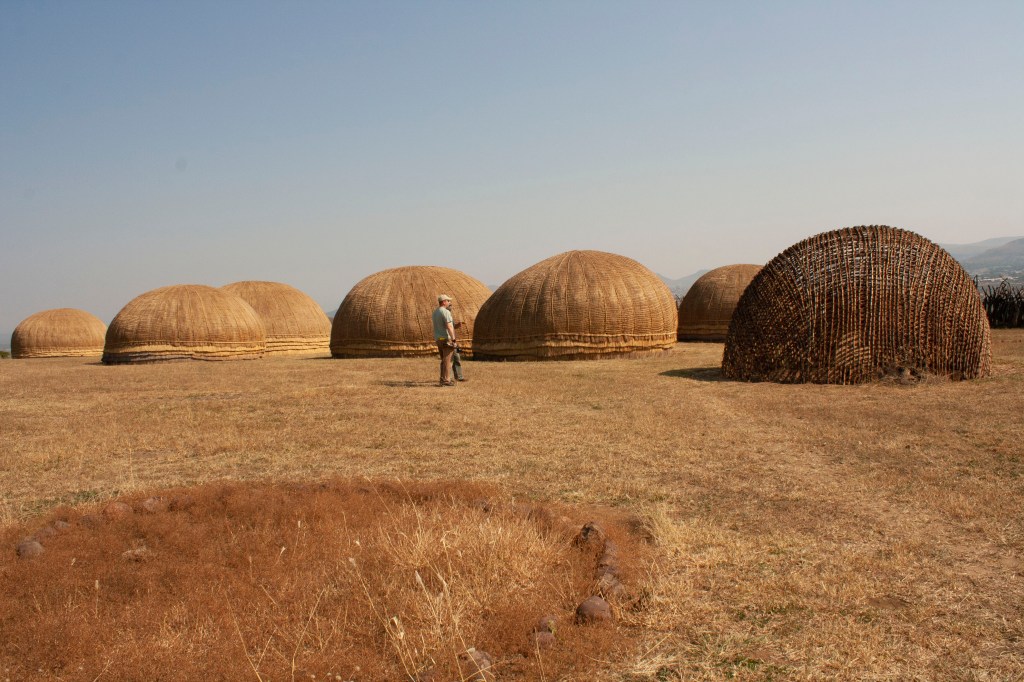
What can be learned from king’s capitals is still vitally important for understanding the Zulu Kingdom. While much research has been done at Dingane’s capital at uMgungundlovu and Cetshwayo’s at oNdini, we are analyzing existing collections with new questions and using new methods. This work will provide fresh insights into life in capitals, such as the isigodlo (royal enclosure) at uMgungundlovu, shown to the right, and the relations that king’s capitals had with other parts of the kingdom and beyond.
Archaeological sciences
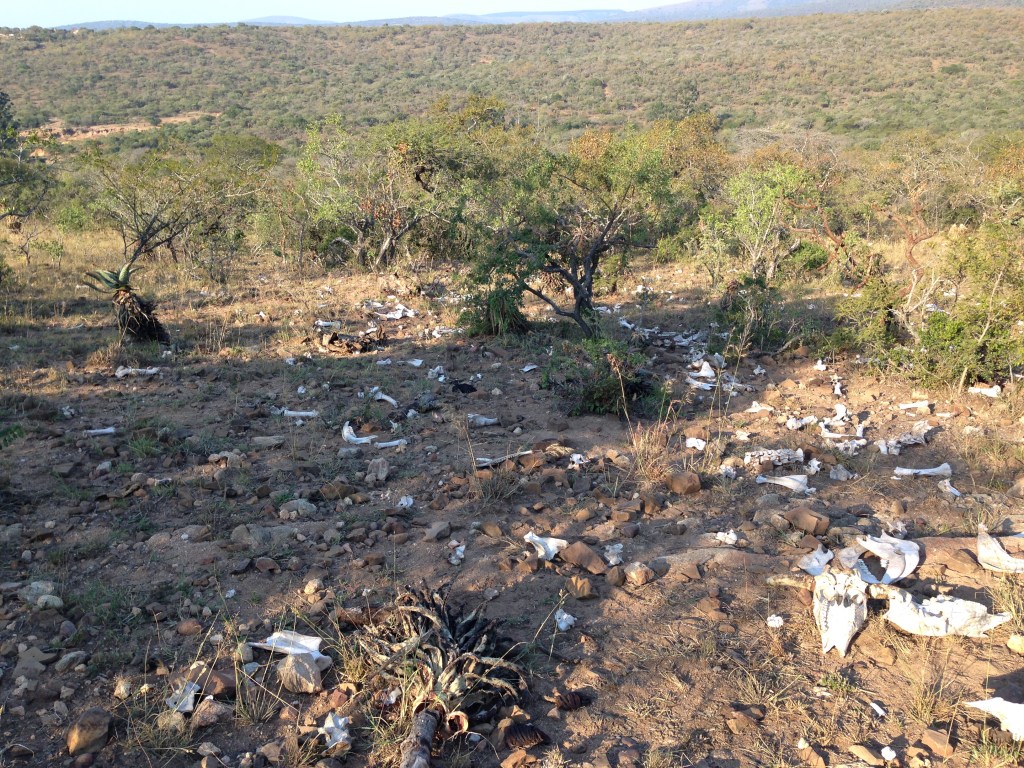
The mineral, chemical and isotopic composition of objects, flora and fauna help us interpret how things were made and used, and how animals were managed. Present-day practices and plant and animals remains, such as this livestock ossuary on a local farm, provide a base-line to interpret these scientific data.
Descendant communities
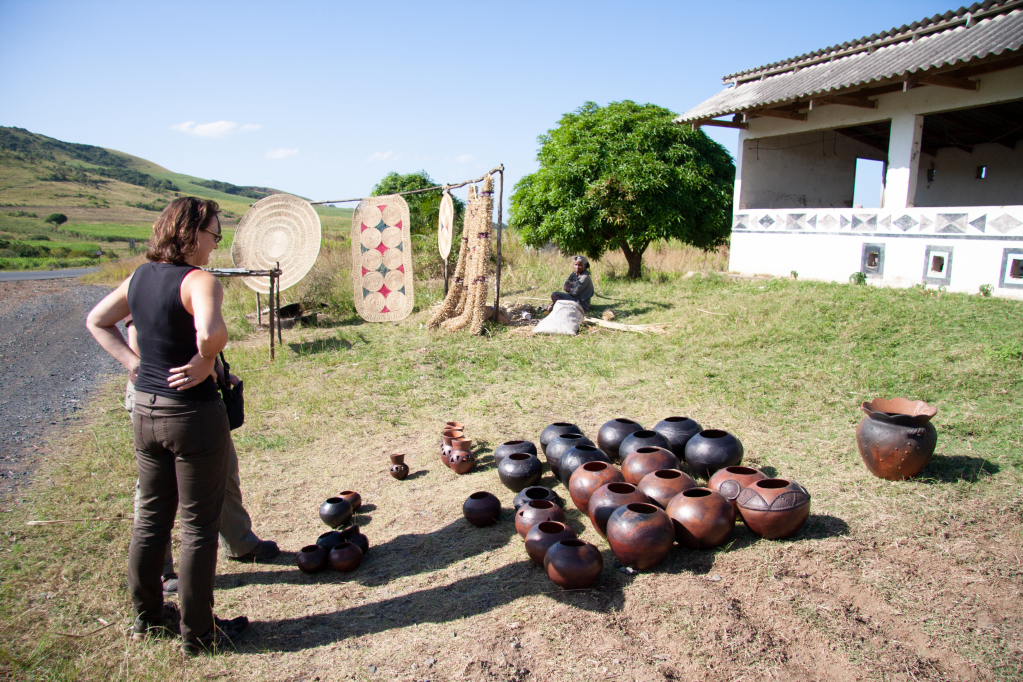
The values, attitudes and meanings of places, people, and things in modern Zulu communities provide a rich source of understanding for both past and present-day concerns, such as making a living from crafts production near Shaka’s second capital, kwaBulawayo, near Eshowe.
Settlement of Babanango
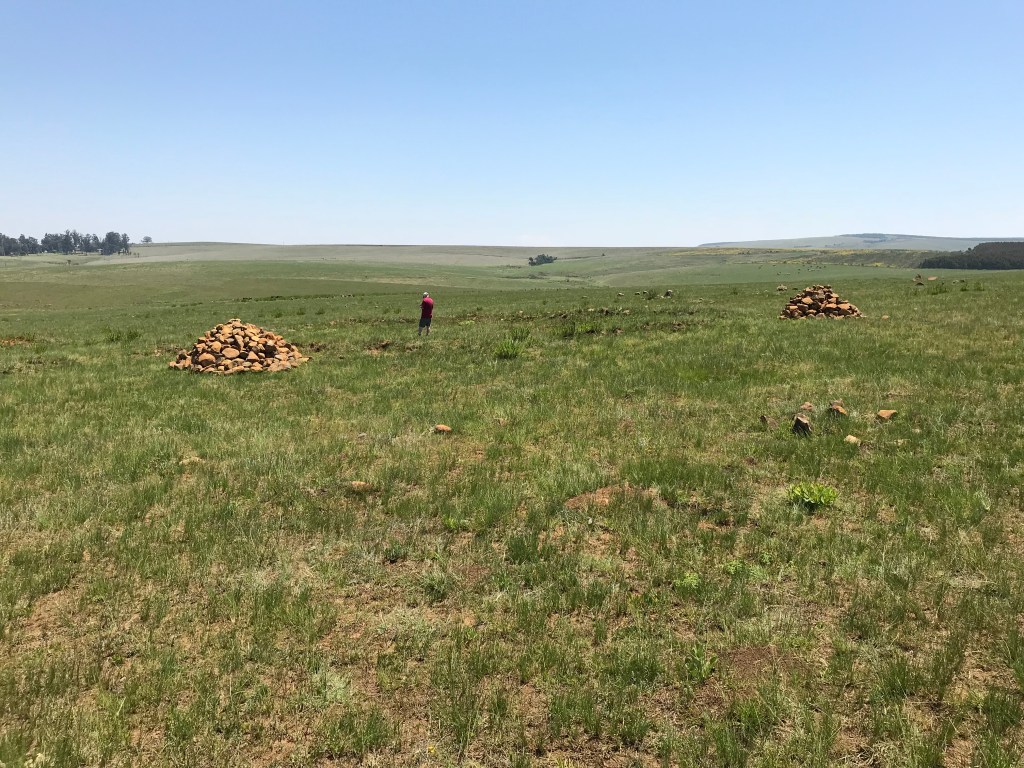
Part of our efforts are to document the location and preservation of pre-kingdom settlement, such as the stone-walled enclosures on the highlands of the Babanango Plateau west of the emaKhosini.
Shown here are dismantled stone livestock enclosures (isibaya) documented in 2018 that likely belong to 18th century (or earlier) family homesteads.
 Zulu Kingdom Archaeology Project